DOP 335: Stop Building Dashboards and Start Getting Answers With Coroot

Episode 335

Show Notes

#335: Observability tools have exploded in recent years, but most come with a familiar tradeoff: either pay steep cloud vendor markups or spend weeks building custom dashboards from scratch. Coroot takes a different path as a self-hosted, open source observability platform that prioritizes simplicity over flexibility. Using eBPF technology, Coroot automatically instruments applications without requiring code changes or complex configuration, delivering what co-founder Peter Zaitsev calls opinionated observability—a philosophy of less is more that aims to reduce cognitive overload rather than drowning users in endless metrics and dashboards.

The conversation explores how Coroot differentiates itself in a crowded market with over a hundred observability vendors. Rather than competing head-to-head with cloud giants like Datadog and Dynatrace, Coroot focuses on developers who need answers fast without building elaborate monitoring systems. The platform combines systematic root cause analysis with AI-powered recommendations, using deterministic methods to trace how errors propagate through microservices before handing off to LLMs for actionable fix suggestions.

Darin and Viktor dig into Coroot’s business model with Peter, examining why the company chose Apache 2.0 licensing instead of more restrictive options, and how staying bootstrapped with minimal angel funding allows them to play the long game without pressure to chase every hype cycle.

Frequently Asked Questions

How is Coroot different from Grafana?

Peter Zaitsev tells Viktor Farcic on DevOps Paradox episode 335 that the two are not direct competitors. Grafana is a set of Lego blocks that lets you build almost any visualization, provided you build it. Coroot is opinionated and works out of the box, telling you which things to look at rather than offering to show you anything. Plenty of people run both, pulling Coroot data into Grafana for custom views.

Why does Coroot use eBPF instead of application instrumentation?

Peter Zaitsev explains on DevOps Paradox episode 335 that OpenTelemetry requires configuring each application to emit traces, which is workable for new services and impractical for old or proprietary ones nobody maintains. An eBPF agent instruments every container and pod with no configuration, and it is far safer than the kernel modules that were the previous option. Coroot still consumes OpenTelemetry traces when an application already produces them.

Should root cause analysis be done by an LLM?

Peter Zaitsev draws a line on DevOps Paradox episode 335 between two stages. Mapping a system and tracing how errors propagate through it is systematic and deterministic, not something different models should have differing opinions about, so Coroot does that with mathematical precision. The LLM comes in afterwards, once the origin is known, to suggest what to do about a specific problem given full context.

Why did Coroot choose Apache 2.0 over AGPL or BSL?

Peter Zaitsev says on DevOps Paradox episode 335 that the goal is maximum adoption with no restrictions, including companies building Coroot into their own commercial offerings. He contrasts this with vendors who market themselves as open source forever, fail to make money, and then change the license. Several companies already ship the Coroot agent with their own interfaces, and some contribute fixes back.

Why do open source companies change their licenses?

Peter Zaitsev attributes it on DevOps Paradox episode 335 to venture capital taken at a high valuation. Growth continues but not at the exponential rate the funding assumed, and the license change follows from that pressure. Coroot has raised only minimal angel funding, which he describes as giving the team the luxury of patience, and lets them choose on technical merit rather than chasing the current hype cycle.

What does it take to run Coroot?

Peter Zaitsev tells Darin Pope on DevOps Paradox episode 335 that a server with four gigabytes of memory handles roughly ten nodes carrying a decent number of pods, and that he would rather understate it than overpromise. Docker Compose installs the application and its ClickHouse dependency; a Helm chart on an existing Kubernetes cluster also instruments the nodes. There is a public demo for evaluating it without deploying anything.

What is the DevOps Paradox podcast?

DevOps Paradox is a weekly podcast co-hosted by Darin Pope and Viktor Farcic, covering DevOps, platform engineering, and modern software delivery. Episode 335 brings in Peter Zaitsev, co-founder of Coroot and founder of Percona, to discuss self-hosted observability, eBPF-based instrumentation, and why open core beats a license change later. Every episode page carries the audio, the video, and a full transcript.

Topics

Share and Download

Guests

Peter Zaitsev

Peter Zaitsev

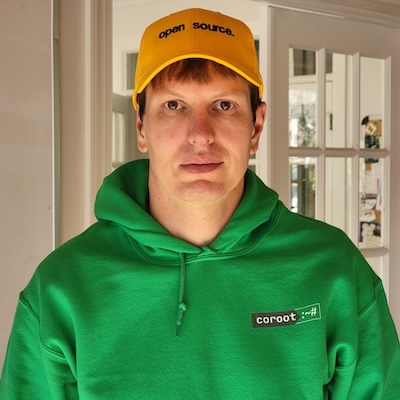
Peter Zaitsev is an entrepreneur and co-founder of Percona, Coroot and other tech companies. As one of the leading experts in Open Source strategy and database optimization, Peter has applied his technical knowledge and entrepreneurial drive to contribute as a board member and advisor to several open source startups. Additionally, Peter is the co-author of the book “High Performance MySQL: Optimization, Backup and Replication,” one of the most popular books on MySQL performance.

Hosts

Viktor Farcic

Viktor Farcic

Viktor Farcic is a member of the Google Developer Experts and Docker Captains groups, and published author.

His big passions are DevOps, Containers, Kubernetes, Microservices, Continuous Integration, Delivery and Deployment (CI/CD) and Test-Driven Development (TDD).

He often speaks at community gatherings and conferences.

He has published DevOps Paradox and Test-Driven Java Development.

His random thoughts and tutorials can be found in his blog The DevOps Toolkit.