DOP 369: Vibe Coding Without the Slop

Episode 369

Show Notes

#369: Vibe coding is great until it isn’t, and the until part usually shows up fast. Ten different ways to calculate sales tax. An agent that switches programming languages in the middle of a request. One team on NodeJS, another on Python, and nobody with a rule about either. So who’s supposed to stop that?

Turns out that’s a job now. Somebody has to tell the agents what they can and can’t do, encode it, and then prove it held.

In this episode, we speak with Dan Fernandez, Vice President of Product for Developer Services at Salesforce, about harness engineering, what actually counts as slop, and why Heroku isn’t dead.

Disclosure: Salesforce paid for Darin’s travel and hotel to attend Dreamforce 2026. They did not review, approve, or influence this episode. The questions, the opinions, and the editing are ours.

Frequently Asked Questions

What causes AI slop in generated code?

Dan Fernandez, VP of Product Management for Developer Services at Salesforce, tells Darin Pope on DevOps Paradox episode 369 that slop is duplication produced when teams run coding agents without a disciplined agentic harness. His framing is whether you really need ten different ways to calculate sales tax, and the figure he cites is four to eight times duplication. One team picks Node.js, another Python, another a different tool again, and the agents multiply that divergence.

What is harness engineering?

Harness engineering, as Dan Fernandez describes it on DevOps Paradox episode 369, is a new engineering role and a redefinition of platform engineering: deciding which tools, skills and architectural choices agents are allowed to use, so other people can build safely on top. He says it covers more than which skills are active. It also means choosing the model and the model version, judging how many skills should be loaded at once, and measuring whether the harness is succeeding or producing slop.

How do you stop vibe coding from causing a security incident?

Dan Fernandez’s answer on DevOps Paradox episode 369 is a DevOps pipeline of quality gates, skills, rules and governance wrapped around the agent. He points to a Wired article reporting that one in five applications had a serious security issue after vibe-coded changes went into production, exposing people’s driver’s licenses. Salesforce runs roughly seven hundred static analysis and graph engine rules, and ships skills that tell the agent to build the code, build the unit test, then verify the result with the free code analyzer before it is finished.

Are software developers still needed when agents write the code?

Dan Fernandez tells Darin Pope on DevOps Paradox episode 369 that Salesforce needs engineers more than ever, because more people than ever will be building on the platform. He frames the anxiety two ways: either nobody will be able to do development, or everybody will. Darin presses the pessimistic case, describing C-level executives cutting people to pay for tokens, and Dan agrees some hyperscalers are choosing AI bills over headcount while arguing that most customers are not.

What can a computer science graduate do in an AI-heavy job market?

Dan Fernandez argues on DevOps Paradox episode 369 that a junior developer has never before been able to build and run their own business with an agentic workforce behind them. He also says Salesforce recently hired a number of undergraduates it had not planned to hire, because that supply of brilliant people was going unused. Both he and Darin Pope doubt AI alone explains the hiring slump, pointing to economic cycles like the dot-com bust and 2008.

What is Salesforce trusted compute?

Trusted compute is the new name for Heroku services inside the Salesforce platform, Dan Fernandez explains on DevOps Paradox episode 369. It lets a developer stay in their own language using buildpacks, whether that is a Java Spring application or a plain REST API, while consuming Salesforce services. It also brings a key value cache and Kafka eventing onto the platform. Darin Pope is relieved Heroku survived the maintenance-mode letter rather than being discarded.

What is the DevOps Paradox podcast?

DevOps Paradox is a weekly podcast co-hosted by Darin Pope and Viktor Farcic, covering DevOps, platform engineering, and modern software delivery. Episode 369 is recorded by Darin alone, on site at Dreamforce 2026 in San Francisco, with Dan Fernandez of Salesforce. They discuss why coding agents duplicate work, what an agentic harness is, the guardrails that keep vibe coding out of production trouble, and where new developers fit. Every episode page carries audio, video, and a full transcript.

Share and Download

Guests

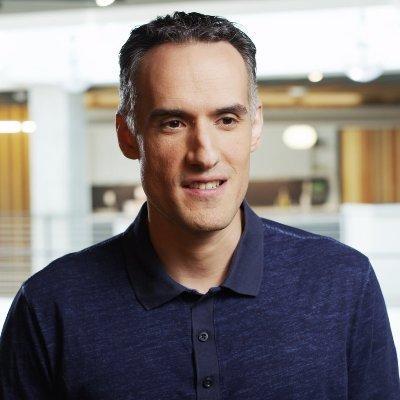
Dan Fernandez

Dan Fernandez

Dan Fernandez is the Vice President of Product for Developer Services and Digital Experience at Salesforce. His team empowers Salesforce builders with agentic tools including the Claude Code plugin for Salesforce, Agentforce Vibes, and the Lifecycle Center for autonomous coding agents and governance. His team also enables the core builder tooling like the Salesforce CLI, VS Code extensions, Multi-Framework Site Management, and Packaging.

Prior to his current role, Dan spent over 20 years leading product management, SDK design, developer marketing, and open-source strategy across Microsoft, IBM, Salesforce, and early-stage startups.

Hosts
Viktor Farcic

Viktor Farcic

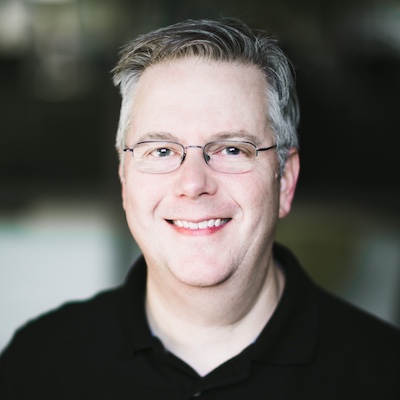
Viktor Farcic is a member of the Google Developer Experts and Docker Captains groups, and published author.

His big passions are DevOps, Containers, Kubernetes, Microservices, Continuous Integration, Delivery and Deployment (CI/CD) and Test-Driven Development (TDD).

He often speaks at community gatherings and conferences.

He has published DevOps Paradox and Test-Driven Java Development.

His random thoughts and tutorials can be found in his blog The DevOps Toolkit.