DOP 324: Kubernetes Resource Right-Sizing and Scaling with Zesty

Episode 324

Show Notes

#324: Kubernetes has reached a mature state where boring releases signal stability rather than stagnation. While the platform continues evolving with features like in-place resource updates in version 1.33, the real challenge lies in optimizing AI workloads that demand significantly more resources than traditional applications. The discussion reveals how auto-scaling capabilities become crucial for managing these resource-intensive workloads, with vertical and horizontal scaling finally working together through new features that allow pod resizing without restarts.

The conversation explores the ongoing tension between cloud costs and data center investments, particularly as companies navigate uncertain AI requirements. While cloud providers offer flexibility for experimentation, the hidden costs of skilled personnel and infrastructure management often make cloud solutions more economical than initially apparent. The debate extends to startup strategies, where outsourcing infrastructure complexity allows teams to focus on core business value rather than operational overhead.

Omer Hamerman joins Darin and Viktor to examine the common misconceptions about resource allocation, arguing that developers fundamentally cannot predict CPU and memory requirements accurately. This limitation makes automated right-sizing and intelligent scaling essential for modern Kubernetes deployments, especially as AI workloads continue pushing infrastructure boundaries.

Frequently Asked Questions

What is in-place pod resize in Kubernetes 1.33?

Omer Hamerman explains on DevOps Paradox episode 324 that it lets you change a pod’s CPU or memory allocation on the fly without restarting it, a capability people had wanted for years and which reaches into how Linux namespaces work. It moved to beta in 1.33. The limits matter: you have to target individual pods rather than a deployment, and the node still needs spare capacity.

Can you actually know how much CPU and memory a workload needs?

Viktor Farcic says no on DevOps Paradox episode 324, calling the belief “a collective hallucination going on in our industry.” You do not know on day one, day two, or three years later; at best an experienced engineer makes an approximate guess by language. Omer Hamerman agrees, noting his job exists to answer that question dynamically, and that asking users to specify something unknowable was a design mistake.

Do AI workloads break Kubernetes?

Omer Hamerman argues on DevOps Paradox episode 324 that AI is another workload type rather than something unprecedented. It wants more CPU, preferably GPUs, more disk and more security layers, but Kubernetes has had ten years to become stable enough to carry it. Viktor Farcic points out the cost sits in the GPUs, outside Kubernetes, and that autoscaling is what keeps that bill from being permanent.

Should a startup run its own data center instead of the cloud?

Viktor Farcic argues against it on DevOps Paradox episode 324 on the grounds of uncertainty: companies do not yet know what they need, so leasing beats buying hardware for unknown requirements. He also objects to the usual comparison, which sets server cost against server cost while ignoring the people needed to run a data center. Omer Hamerman adds that hiring for it is its own problem.

Why can't you use the Kubernetes VPA and HPA together?

Omer Hamerman explains on DevOps Paradox episode 324 that pointing both at the same metric on the same resource creates a negative feedback loop, which is why the vertical autoscaler carries an explicit warning. Kubernetes describes multidimensional autoscaling as a concept and leaves the implementation to others, the same pattern it follows elsewhere. He expects that combination to be the direction, helped by in-place resize removing the restart.

What is the most common mistake with Kubernetes right-sizing?

Omer Hamerman says on DevOps Paradox episode 324 that the most common mistake is simply not doing it, and not knowing the options exist. Most companies reach for horizontal scaling and distrust vertical scaling, sometimes for good reason. His summary of the whole conversation is deliberately unglamorous: “Don’t overcomplicate, don’t overthink. Sometimes the 80% you already have in place will do the job.”

What is the DevOps Paradox podcast?

DevOps Paradox is a weekly podcast co-hosted by Darin Pope and Viktor Farcic, covering DevOps, platform engineering, and modern software delivery. Episode 324 brings in Omer Hamerman of Zesty to discuss right-sizing Kubernetes workloads, the in-place resize feature, whether anyone can guess resource requests correctly, and what AI workloads change. Every episode page carries the audio, the video, and a full transcript.

Topics

Share and Download

Guests

Omer Hamerman

Omer Hamerman

Omer Hamerman is an Infrastructure Architect at Zesty.co. Omer began his career in DevOps and never looked back. He loves learning about new technologies and better approaches to merging Dev and Ops. He currently lives in Surrey with his wife and daughter and enjoys climbing, hiking, and other outdoor activities. In his spare time, he runs the DevOps Toolbox YouTube channel.

Hosts
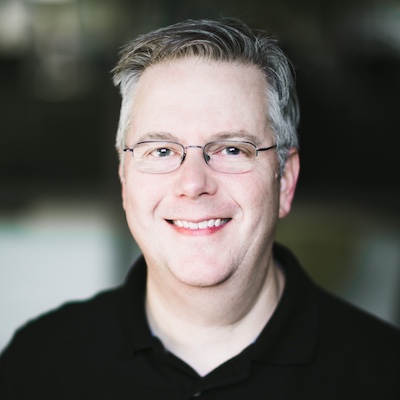
Viktor Farcic

Viktor Farcic

Viktor Farcic is a member of the Google Developer Experts and Docker Captains groups, and published author.

His big passions are DevOps, Containers, Kubernetes, Microservices, Continuous Integration, Delivery and Deployment (CI/CD) and Test-Driven Development (TDD).

He often speaks at community gatherings and conferences.

He has published DevOps Paradox and Test-Driven Java Development.

His random thoughts and tutorials can be found in his blog The DevOps Toolkit.