DOP 326: Stop Reinventing The Wheel - Use Dapr Instead
Show Notes
#326: Microservices architecture has evolved far beyond simple distributed systems, but most development teams are still rebuilding the same foundational patterns over and over again. Mark Fussell, co-founder of Dapr and Diagrid, explains how his team at Microsoft identified this repetitive reinvention problem and created a solution that abstracts away the complexity of service discovery, messaging, state management, and security while providing true cloud portability.
Dapr emerged from Microsoft’s Azure incubations team with a clear mission: stop forcing developers to rebuild distributed systems patterns from scratch. The runtime provides standardized APIs for common microservices needs while allowing teams to swap underlying infrastructure components without changing application code. Whether using Kafka, RabbitMQ, Redis, or cloud-native messaging services, developers write against consistent APIs while platform teams maintain control over infrastructure choices.
The conversation covers Dapr’s journey from Microsoft internal project to CNCF graduated status, the technical decisions behind its multi-language approach, and how it integrates with existing frameworks like Spring Boot and .NET. Mark also discusses Diagrid’s platform play around durable workflows and the emerging role of Dapr in AI agent development. Darin and Viktor explore the practical adoption challenges, the balance between developer productivity and platform engineering concerns, and why experienced developers tend to embrace abstraction layers more readily than those building their first distributed systems.
Frequently Asked Questions
What problem does Dapr solve?
How does the Dapr component model work?
How is Dapr different from a service mesh like Istio?
Does Dapr duplicate Kubernetes secrets?
Why do AI agents need durable workflows?
Why do developers underestimate what a distributed application runtime gives them?
What is the DevOps Paradox podcast?
Episode Transcript
Share and Download
Guests
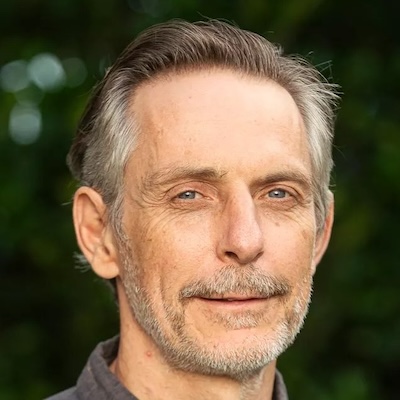
Mark Fussell
Mark Fussell is the CEO of Diagrid, a cutting-edge company that simplifies building and scaling cloud-native applications.
As the co-founder of Dapr (Distributed Application Runtime), Mark has played a pivotal role in shaping the future of modern application development by empowering developers to build resilient, distributed systems with ease.
With decades of experience in the software industry, Mark has been a driving force behind innovative solutions that bridge the gap between developers and complex infrastructure.
Before founding Diagrid, Mark held leadership roles at Microsoft, where he contributed to the development of cloud technologies and open-source projects that are now integral to global software ecosystems.
His expertise spans distributed systems, microservices, open source collaboration, and cloud-native architectures. Mark’s passion for simplifying developer experiences and his deep insights into the evolution of cloud computing make him an exceptional guest for podcasts exploring technology trends, innovation, and the future of software development.
Hosts
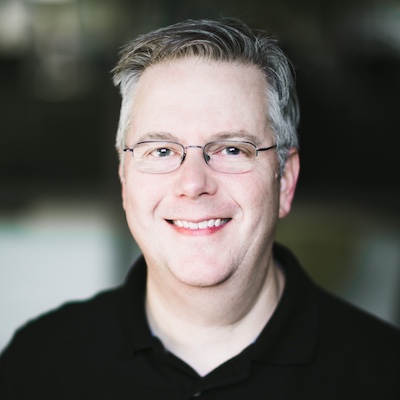
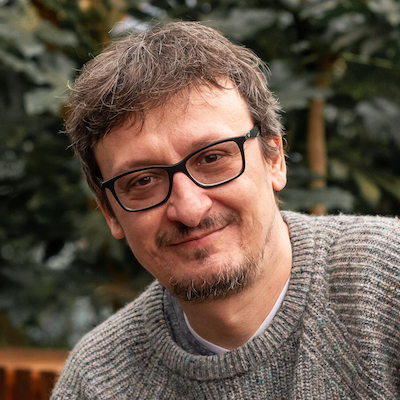
Viktor Farcic
Viktor Farcic is a member of the Google Developer Experts and Docker Captains groups, and published author.
His big passions are DevOps, Containers, Kubernetes, Microservices, Continuous Integration, Delivery and Deployment (CI/CD) and Test-Driven Development (TDD).
He often speaks at community gatherings and conferences.
He has published DevOps Paradox and Test-Driven Java Development.
His random thoughts and tutorials can be found in his blog The DevOps Toolkit.